
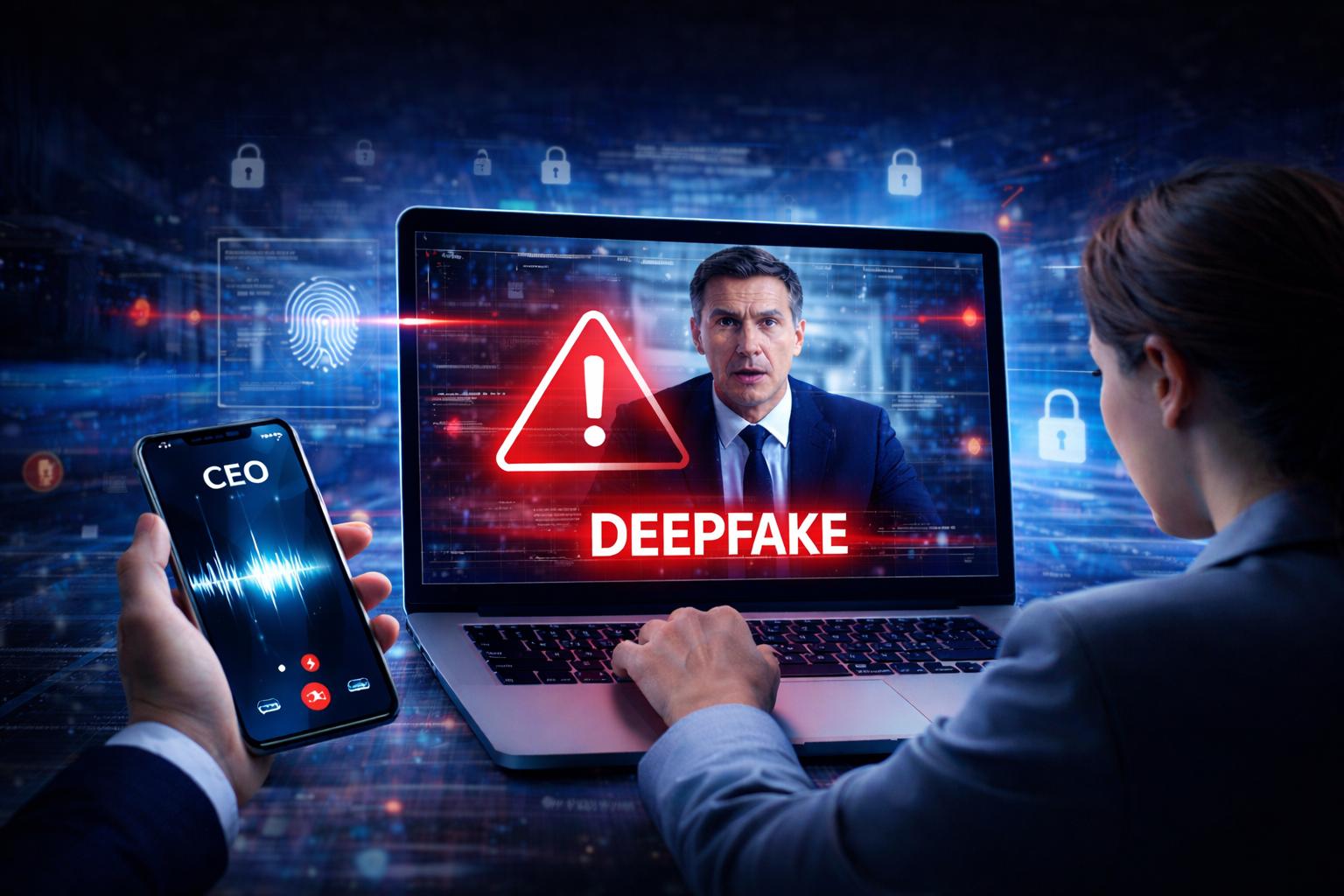
Artificial intelligence has made it easier to create realistic images, videos, and voice recordings. While these technologies have valuable applications in education, entertainment, and business, they can also be misused by cybercriminals.
One growing concern is the use of deepfakes in scams.
A fraudulent video call may appear to show a company executive. A voice message may sound like a manager requesting an urgent payment. A fake website may imitate a trusted organization to convince someone to share confidential information.
For businesses that rely on digital communication, understanding these threats is becoming an important part of cybersecurity.
What Is a Deepfake Scam?
A deepfake scam uses AI-generated or manipulated audio, video, or images to deceive people.
Criminals may impersonate executives, employees, customers, public figures, or representatives of trusted organizations.
The objective is often to persuade a victim to transfer money, disclose credentials, reveal confidential data, or visit a fraudulent website.
Deepfakes are not limited to sophisticated video production. A scam may combine a convincing voice recording, a spoofed phone number, a fake email address, and an urgent request.
The FBI has warned about fraud schemes involving AI-generated videos and impersonation of trusted authorities. See its 2026 public service announcement on scammers impersonating the IC3.
5 Common Deepfake Scams Businesses Should Know About
1. Fake CEO or Manager Video Calls
An employee receives a video call that appears to come from a senior executive requesting an urgent transfer or confidential document.
The request may sound realistic because it uses familiar names, company terminology, and a sense of urgency.
How to protect your business: Verify unusual financial requests through a separate, trusted communication channel. Require a second approval for high-value transfers.
2. AI Voice-Cloning Scams
Scammers may imitate a person’s voice using publicly available recordings or other audio sources.
They can then call employees or family members pretending to need immediate assistance.
How to protect yourself: Do not rely on voice recognition alone. Call the person back using a previously verified number and establish a verification phrase for sensitive situations if appropriate.
3. Fake Customer Support Messages
Fraudsters impersonate technical support teams, payment providers, or online platforms.
They may send messages claiming an account is blocked or a payment has failed, encouraging the recipient to click a malicious link.
How to protect your business: Verify support messages through official websites or known contact channels. Never share passwords or one-time authentication codes in response to unsolicited requests.
4. Fake Websites and Business Identities
A scammer may create a website that closely resembles a legitimate company or government portal.
Even if the branding looks convincing, the domain may be fraudulent and designed to collect personal or financial information.
How to protect your business: Check domain names carefully, use bookmarks for important services, and verify payment details before entering sensitive information.
5. Fraudulent Recruitment and Vendor Communications
Criminals may use fabricated identities, manipulated video interviews, or impersonated vendor representatives to obtain access to business systems or redirect payments.
How to protect your business: Verify identities through independent channels, follow vendor onboarding procedures, and restrict access until the relevant checks are complete.
Warning Signs of a Deepfake or AI-Powered Scam
Some warning signs include:
- Unexpected requests for urgent payments or confidential information.
- Instructions to bypass normal approval procedures.
- Unfamiliar links or slightly altered domain names.
- Requests to keep a transaction secret.
- Sudden changes to supplier banking details.
- Pressure to act before verifying the request.
- Communication that does not match established company procedures.
Visual or audio imperfections can sometimes be clues, but modern synthetic media can look and sound convincing. Independent verification is more reliable than trying to detect every deepfake by appearance alone.
How Businesses Can Strengthen Cybersecurity
Establish payment verification procedures
Require independent verification and appropriate approvals before changing supplier payment details or making unusual transfers.
Protect employee accounts
Use multifactor authentication or passkeys where supported, apply strong access controls, and remove unnecessary account privileges.
Train employees regularly
Teach employees how impersonation scams work and encourage them to report suspicious messages without fear of blame.
Secure business websites
Keep website software updated, use HTTPS, protect administrator accounts, maintain backups, and review third-party integrations.
Prepare an incident response plan
Define who should be contacted if an employee clicks a suspicious link, shares credentials, or approves a fraudulent payment. Quick reporting can help reduce further damage.
Why Website Security Matters for Digital Businesses
A business website is often central to customer communication, lead generation, payments, and online sales.
Weak access controls, outdated software, and poorly managed integrations can expose businesses to avoidable risks.
Website development should therefore consider security alongside appearance and functionality.
Businesses using WordPress, Shopify, or custom-built platforms should review administrator access, application permissions, account security, data handling, and maintenance procedures.
No website can prevent every type of fraud, but responsible development and ongoing maintenance help reduce technical vulnerabilities.
How Developers Life Can Help
Developers Life provides digital solutions for businesses, including:
- Website design and development.
- WordPress website development.
- Shopify and eCommerce development.
- Custom web development and integrations.
- Website maintenance and technical support.
- SEO and digital marketing services.
We help businesses improve their digital platforms, maintain their websites, and plan technical improvements based on their requirements.
For organizations concerned about website reliability or access security, a technical review can help identify areas that deserve attention. Specialized incident response or forensic investigations should be handled by qualified cybersecurity professionals where required.
Conclusion
Deepfake scams demonstrate how digital fraud can exploit human trust as well as technical weaknesses.
Businesses can reduce risk by verifying unusual requests, training employees, securing online accounts, maintaining websites, and establishing clear approval procedures.
As AI-generated media becomes more convincing, the safest approach is not to trust every voice, video, or message at face value.
Need help improving your business website?
Explore website development, eCommerce, and technical support services at Developers Life.
Frequently Asked Questions
What is a deepfake scam?
It is a fraudulent activity that uses AI-generated or manipulated media to impersonate a person or organization.
Can AI-generated voices be used for fraud?
Yes. Voice cloning can be used to imitate familiar people and make fraudulent requests seem legitimate.
How can businesses prevent deepfake fraud?
Use independent identity verification, payment approval procedures, employee training, secure accounts, and clear reporting processes.
Can website development prevent deepfake scams?
Website development alone cannot prevent all impersonation fraud. Secure authentication, proper integrations, maintenance, and business verification procedures can help address related risks.
Does HTTPS guarantee a website is legitimate?
No. HTTPS encrypts the connection but does not prove that the website operator is trustworthy. Always verify the domain and organization independently.