
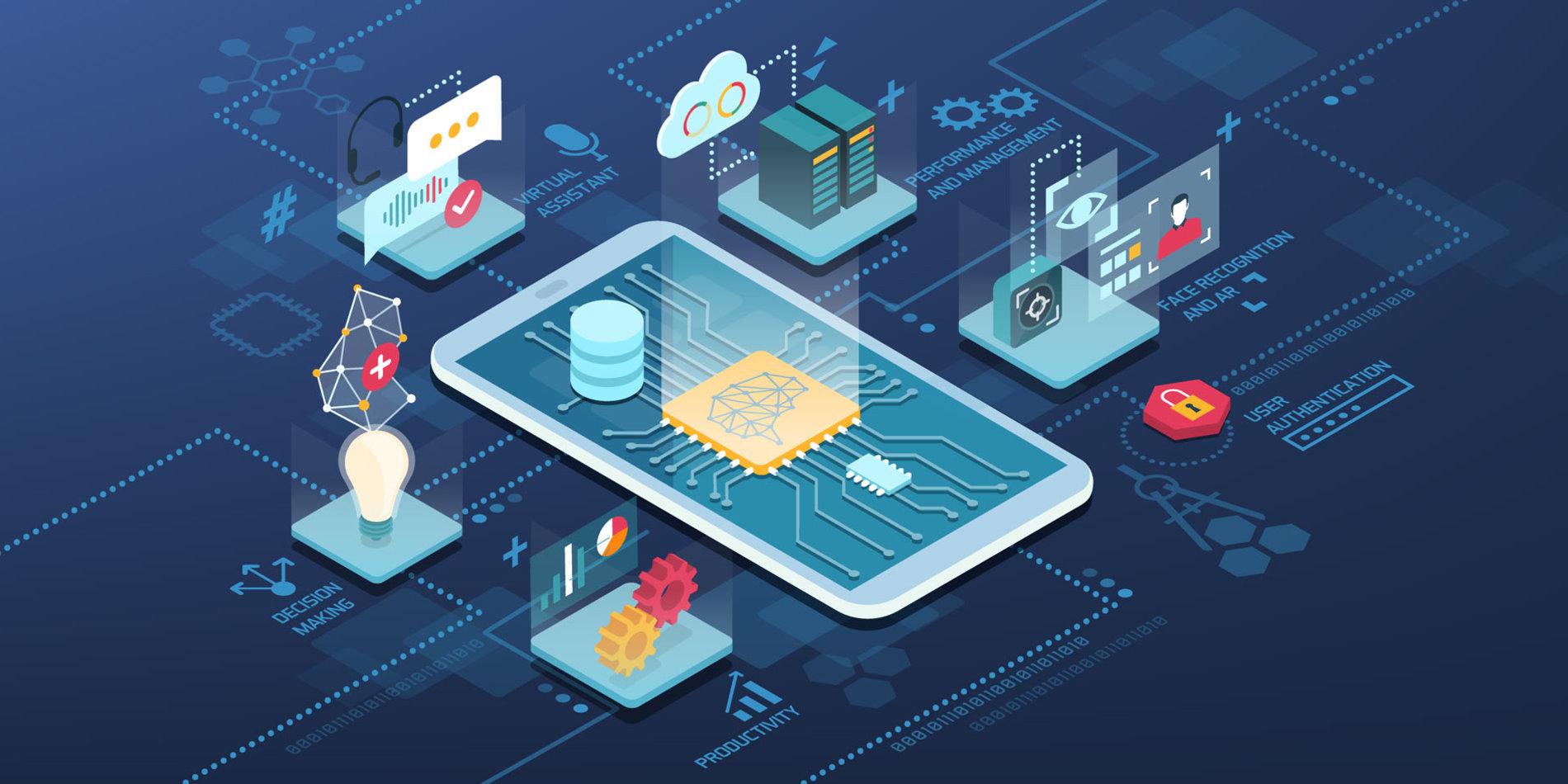
Artificial intelligence is often associated with powerful cloud servers that process information over the internet. However, another important technology trend is bringing AI capabilities closer to the devices that generate and use data.
This approach is known as edge AI.
Instead of sending every request to a remote server, edge AI allows compatible devices or nearby computing systems to process certain information locally.
In 2026, edge AI is attracting attention across industrial systems, smart devices, connected equipment, and business applications because it can support faster responses, reduce dependence on continuous connectivity, and help organizations maintain greater control over their data.
But how does edge AI work, and when does it make sense for a business?
What Is Edge AI?
Edge AI combines artificial intelligence with edge computing.
Edge computing means processing data close to where it is created, rather than sending all of it to a centralized cloud environment.
When AI models run on compatible devices or local computing infrastructure, they can analyze information and produce results without needing every operation to travel to a remote server.
Examples include a smart camera identifying an object locally, an industrial sensor detecting an unusual operating pattern, or a device recognizing speech without sending every audio sample to the cloud.
Not all AI systems work this way. Many still rely on cloud computing, and some use a hybrid approach that combines local and remote processing.
Why Is Edge AI Becoming Important in 2026?
1. Faster Responses
Sending information to a remote server and waiting for a result can introduce latency.
For applications that need quick responses, local processing may reduce delays.
This can be useful in industrial monitoring, real-time device control, and other applications where immediate feedback matters.
2. Greater Control Over Data
Processing sensitive information locally can reduce the amount of data that needs to be transmitted to external services.
For businesses handling confidential operational information, this may support privacy and data-governance objectives.
However, local processing does not automatically guarantee privacy. Devices still require secure storage, access controls, software updates, and appropriate data-handling policies.
3. Reduced Dependence on Internet Connectivity
Some edge AI systems can continue performing supported tasks when an internet connection is unreliable or unavailable.
This can be useful for remote equipment, industrial environments, and field operations.
The extent of offline capability depends on the device, the model, and the application’s design.
4. More Efficient Use of Network Resources
When devices analyze information locally, they may only need to send selected results instead of continuously transmitting large volumes of raw data.
This can reduce network traffic in some applications, although actual cost savings depend on the workload and infrastructure.
5 Real-World Applications of Edge AI
Smart Cameras and Security Systems
Compatible cameras can analyze video locally to identify predefined events or unusual activity.
This may reduce the need to transmit every video stream to a remote server. Businesses still need appropriate privacy policies, access controls, and lawful use of monitoring systems.
Manufacturing and Industrial Monitoring
Factories can use local AI systems to analyze equipment data, detect patterns, and identify possible maintenance needs.
Fast local processing can be valuable when decisions must be made close to machinery or production systems.
Healthcare Devices
Some healthcare devices can use local processing to assist with supported monitoring or signal analysis.
Applications involving medical decisions require appropriate validation, regulatory compliance, and professional oversight. AI output should not automatically be treated as a diagnosis.
Smartphones and Personal Devices
On-device AI can support selected language, image, speech, and productivity features directly on compatible hardware.
Available capabilities depend on the device’s processing power, memory, software, and model requirements.
Retail and eCommerce Operations
Retail businesses may use edge computing to process local sensor data, monitor stock-related events, or support in-store analytics.
For online retailers, edge AI may be part of a broader technology architecture that also includes cloud-based recommendation systems, inventory services, and customer platforms.
Edge AI vs. Cloud AI: What’s the Difference?
| Feature | Edge AI | Cloud AI |
|---|---|---|
| Processing location | Device or nearby system | Remote cloud infrastructure |
| Response time | Can be faster for local tasks | Depends partly on network latency |
| Internet dependency | Some tasks can work offline | Often requires connectivity |
| Computing resources | Limited by local hardware | Can scale with cloud resources |
| Data handling | Can keep selected data local | May transmit data to remote services |
| Best suited for | Local, time-sensitive processing | Large-scale or resource-intensive workloads |
Neither approach is always better. The right choice depends on the application’s performance requirements, privacy needs, cost, and technical constraints.
What Should Businesses Consider Before Adopting Edge AI?
Before investing in edge AI, organizations should identify the business problem they want to solve.
Consider these five factors:
Hardware requirements: Can existing devices run the required model efficiently?
Data privacy: What information is collected, processed, stored, and transmitted?
Integration: Can the solution communicate reliably with existing applications and business systems?
Maintenance: Who will manage software updates, device security, model versions, and technical support?
Return on investment: Will the solution measurably improve speed, reliability, cost, or operational efficiency?
A small pilot project is often a better starting point than deploying an AI system across an entire organization.
The Role of Custom Software Development
Edge AI projects often require more than an AI model. They may need dashboards, APIs, device integrations, data pipelines, user interfaces, and monitoring tools.
Custom software development can connect these components into a practical business solution.
For example, a company may need a web dashboard to display alerts from local devices, an API to exchange data with its existing system, and a secure interface for managing device settings.
The design should account for how data moves between devices, local infrastructure, and cloud services.
For further technical context, see Qualcomm’s 2026 overview of edge AI in industrial applications.
How Developers Life Can Help Businesses Embrace New Technology
Developers Life helps businesses build and maintain digital solutions through services including:
- Website design and website development.
- Custom web development and application integrations.
- WordPress website development.
- Shopify and eCommerce development.
- SEO and digital marketing services.
- Website maintenance and technical support.
These services can provide the web interfaces, integrations, and digital infrastructure that form part of a broader technology solution.
For businesses exploring edge AI, the first step is to identify the operational requirement and determine which components need custom development. Specialized hardware, embedded systems, or AI model deployment may also require dedicated engineering partners.
Our focus is on helping businesses find practical technology solutions that align with their objectives, resources, and long-term plans.
Conclusion
Edge AI is expanding the ways businesses can use artificial intelligence by bringing selected processing tasks closer to devices and data sources.
Its potential benefits include faster responses, reduced network traffic, offline functionality for supported tasks, and greater control over certain types of data.
However, edge AI is not a universal replacement for cloud computing. Many applications benefit from combining local processing with cloud-based services.
For businesses considering this technology, the most important step is to start with a clear problem, evaluate the available infrastructure, and measure the results of a focused implementation.
Planning a new digital solution for your business?
Visit Developers Life to explore website development, custom web solutions, eCommerce development, and technical support.
Frequently Asked Questions
What is edge AI in simple terms?
Edge AI means running AI tasks on a device or nearby computing system instead of sending every task to a remote cloud server.
Is edge AI better than cloud AI?
Not always. Edge AI can help with local processing and low-latency tasks, while cloud AI may be better suited to applications requiring greater centralized computing resources.
Does edge AI work without the internet?
Some edge AI applications can perform specific tasks offline, provided the device has the necessary models, data, and computing resources.
Is edge AI more secure?
Local processing can reduce data transmission, but security still depends on device protection, software updates, access controls, and the overall system design.
Can small businesses benefit from edge AI?
Potentially, particularly where local processing solves a specific operational problem. Businesses should assess feasibility, cost, maintenance, and measurable benefits before investing.